What Are All the Extracurricular Activities Offered by Schools in Gurgaon
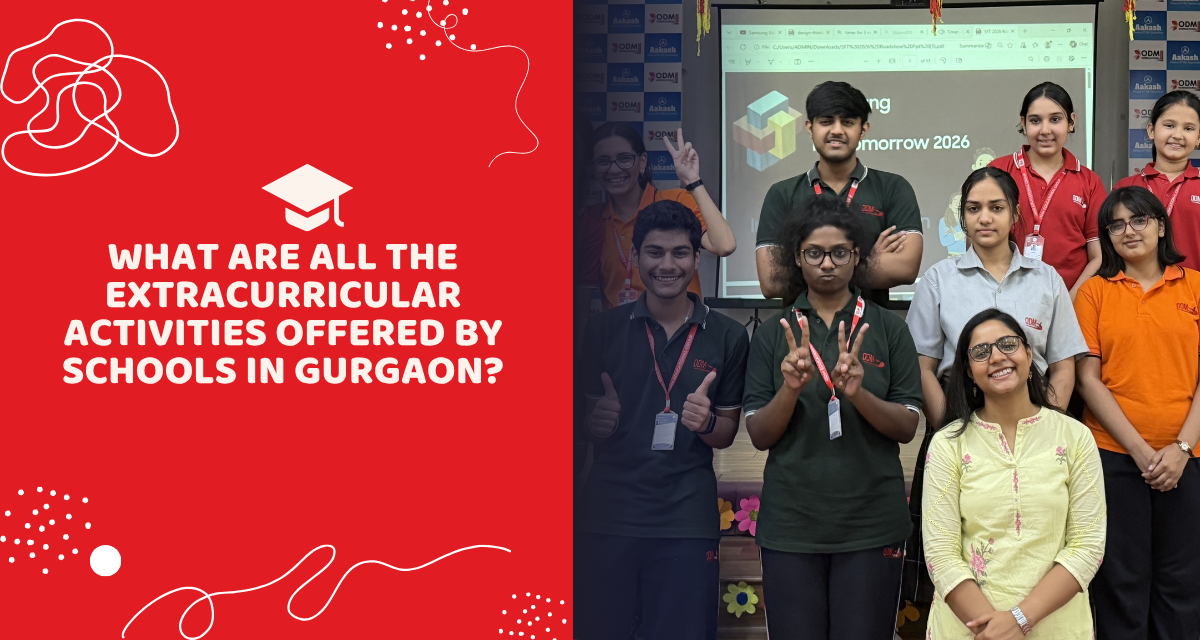
There is something you notice almost immediately when you walk through a good school campus on a weekday afternoon. The corridors are rarely empty. Somewhere, a football team is mid-drill on a freshly marked field. A student is rehearsing her monologue for an upcoming theatre production. A small group of young coders is hunched over a screen, debugging a line of Python with the kind of concentration most adults struggle to summon.
That energy, purposeful and occasionally loud, is the hallmark of schools in Gurgaon that genuinely understand what education is for. At ODM International School, this belief runs deep. A student who discovers a passion for debate, dance, or data science alongside their academic journey does not just become a better student. They become a more complete person.
Sports and Physical Education
Physical development and mental resilience are not separate pursuits. They grow together, and the best schools know it. Schools in Gurgaon with expansive campuses invest seriously in sports programmes that go well beyond the obligatory PE period.
Students typically have access to:
Team sports such as football, basketball, volleyball, cricket, and kabaddi, with inter-school tournaments that build competitive spirit and teach students how to function as part of something larger than themselves
Individual disciplines, including swimming, athletics, badminton, table tennis, and chess (which sharpens the same mental faculties as physical sport, just more quietly)
Yoga and mindfulness sessions, increasingly recognised as essential to a student's overall sense of calm and wellbeing
What makes these programmes stick is not the facilities alone but the quality of coaching and the real stakes involved. Representing your school at the district or national level is a meaningful experience. Sport teaches children how to lose gracefully and win humbly. No textbook does that quite as well.
Creative and Performing Arts
Creativity is not a soft skill. It is, increasingly, the skill. Schools in Gurgaon that recognise this have built arts programmes that span visual art, music, dance, and theatre, treating each with the same seriousness as a core subject.
Visual Arts and Craft
From painting and sculpture to digital illustration, art departments encourage students to find and trust their own voice. Annual exhibitions give young artists a real audience and the sometimes uncomfortable experience of presenting their work for others to respond to.
Music
Western and Indian classical traditions often sit side by side in a good school music programme. Students learn instruments such as guitar, keyboard, tabla, and violin and participate in orchestras, choirs, and cultural performances. Theory classes run alongside practical training, so students understand what they are playing, not just how.
Dance and Theatre
Dance forms ranging from Bharatanatyam and folk traditions to contemporary and hip-hop reflect both cultural roots and a genuinely global sensibility. Theatre, meanwhile, goes far beyond the annual school play. It teaches students to inhabit a character, project confidence, and speak with clarity. Those are skills that travel well, whether you end up on a stage or in a meeting room.
Clubs and Special Interest Groups
Clubs are where curiosity finds its home. The range offered by top schools in Gurgaon reflects just how varied student interests have become, and how seriously good schools take the idea that not every child will find their best self through academics alone.
Some of the most active clubs include:
Debate and Model United Nations (MUN), which sharpen critical thinking and give students practice in making a case under pressure
Eco and Nature Clubs, which foster environmental responsibility through hands-on, real-world projects
Literary Clubs, for students who find meaning in books, poetry, and the act of storytelling
Cooking and Culinary Clubs, which are surprisingly effective at building patience, precision, and the ability to work with others
Film and Photography Clubs, where technical skill meets artistic sensibility in genuinely interesting ways
What makes these spaces work is that they are student-led. A teacher may guide and support, but the agenda, the initiatives, and the ideas belong to the students. That sense of ownership changes how children show up.
Academic Support and Extension
Not every extracurricular activity is recreational, and that is worth saying plainly. Some of the most meaningful enrichment happens in academic extension programmes that push students beyond their grade-level curriculum in structured, purposeful ways.
Olympiad preparation in mathematics, science, English, and social studies is taken seriously in leading schools. Science fairs encourage original thinking and independent inquiry. Spell bees and quiz competitions build breadth of knowledge. These activities do not just prepare students for competitive examinations. They cultivate something more lasting: intellectual hunger.
For students who need additional support, peer-tutoring programmes and structured remedial sessions ensure no child quietly falls behind. Both ends of the spectrum are attended to with care.
Community Service and Leadership Development
The most enduring thing a school can teach is that a student's responsibility does not end at the school gate. Community service programmes that are woven into the school calendar, rather than added as a token afterthought, develop genuine empathy in a way that cannot be manufactured.
Schools in Gurgaon are increasingly incorporating structured social outreach into their extracurricular frameworks. Students visit old-age homes, participate in cleanliness drives, support local artisans, and raise funds for causes they have chosen themselves. Student councils, house systems, and leadership development programmes give children real practice in governance, negotiation, and collective decision-making. These experiences shape character in ways that no examination can capture or credit.
Technology and Innovation
The technology clubs in forward-thinking schools in Gurgaon have become spaces of genuine, sometimes surprising, creativity. Robotics, coding, artificial intelligence, and app development are no longer subjects left to engineering colleges.
Students at the school level are building functioning robots, designing mobile applications, and competing in hackathons. 3D printing labs and maker spaces allow an idea to travel from a sketch on paper to a working prototype. These environments reward creative risk-taking and the willingness to fail, adjust, and try again. Students who spend time in these spaces often arrive at university with a portfolio that speaks for itself, not just a mark sheet.
International Exposure Through Events and Competitions
Participation in regional, national, and international competitions gives students a perspective that classroom learning alone simply cannot provide. MUN conferences, inter-school Olympiads, CBSE cluster events, sports tournaments, and arts competitions all broaden a student's sense of what the world looks like and what they are capable of within it.
For schools in Gurgaon with an international orientation, exchange programmes and collaborative projects with schools abroad add a further dimension. Meeting peers from different countries and educational traditions does something quietly important: it reshapes assumptions and builds the kind of global fluency that is genuinely useful in adult life.
The Balance Between Academics and Extracurriculars
Many parents, reasonably, worry that an active extracurricular life might chip away at academic performance. The evidence, both from research and from lived school experience, tends to say otherwise. Students who are genuinely engaged, whether in sport, art, or service, often manage their time better, carry less anxiety, and bring more focus to their studies when it counts.
The key is thoughtful scheduling and the willingness to trust students to find their own rhythm. Schools that communicate openly with families, allow students to pursue depth rather than quantity, and resist overloading the calendar are the ones that genuinely get the balance right. That is the approach on which ODM International School is built.
Conclusion
The richness of extracurricular life at schools in Gurgaon reflects something real about how education is changing. Scoring well is no longer the whole story. The goal is to send young people into the world who are curious, capable, compassionate, and confident enough to figure out the parts nobody taught them.
Sport, art, technology, leadership, and service are not interruptions to that goal. In many ways, they are the point.
For families thinking seriously about where to enrol their child, the most useful question is not just "what will my child learn here?" It is "Who will my child become?" At a school with a genuinely holistic extracurricular programme, that answer tends to be more interesting than any report card.
FAQs
At what age can children start participating in extracurricular activities at school?
Most schools begin introducing activity-based learning in the primary years. Structured clubs and competitive programmes typically open up from middle school onwards, though foundational exposure to music, art, and movement starts much earlier.
Will extracurricular activities affect my child's academic performance?
Research and school experience both suggest that students who participate regularly in extracurricular activities tend to perform better academically, not worse. Engagement outside the classroom builds focus, time management, and resilience, all of which carry directly into academic work.
What kinds of extracurricular activities do schools in Gurgaon typically offer?
Most reputable schools in Gurgaon offer a wide spectrum of activities, including sports, performing arts, technology clubs, community service, and academic enrichment programmes. The range has grown considerably in recent years, with many schools now including robotics, MUN, and creative arts alongside traditional options like cricket and classical dance.
How do I know which activity is the right fit for my child?
The honest answer is that you often find out by trying. Good schools create a low-pressure environment in the early years where children can explore different interests before committing to something. Pay attention to what your child talks about after school; that enthusiasm is usually the best guide.
ODM International School,Gurugram
Author